

Cafe table base guide: sizes, heights and stability
A cafe table that wobbles or tips loses customers. Most problems come from a base that is too small or too light for the top. This guide gives the working rules.
Three standard heights
| Table type | Typical finished height | Seat used with it |
|---|---|---|
| Dining / cafe | 720–760 mm | Chair, seat about 450 mm |
| Counter | about 900 mm | Counter stool, seat about 600–650 mm |
| Bar / high table | 1050–1100 mm | Bar stool, seat about 750 mm |
Base height is the finished height minus the top thickness.
Matching base size to top size
The wider and heavier the top, the wider the base must spread. As a starting point, a base spread of around 60 to 70 percent of the top width works for most dining-height tables. Tall tables need proportionally more, because the top's leverage on the base grows with height.
- Small two-seater tops (about 600 mm) work on a compact base.
- Four-seater tops (about 750 to 900 mm) need a wide cross or four-leg base.
- Rectangular tops for six usually need two bases or a frame.
Stone and thick solid-wood tops are heavy: tell the base maker the top material and weight.
Base styles
- Cross (X) base: four arms from a centre column, stable and leaves knee room.
- Round plate base: a heavy disc, clean look, easy to clean around.
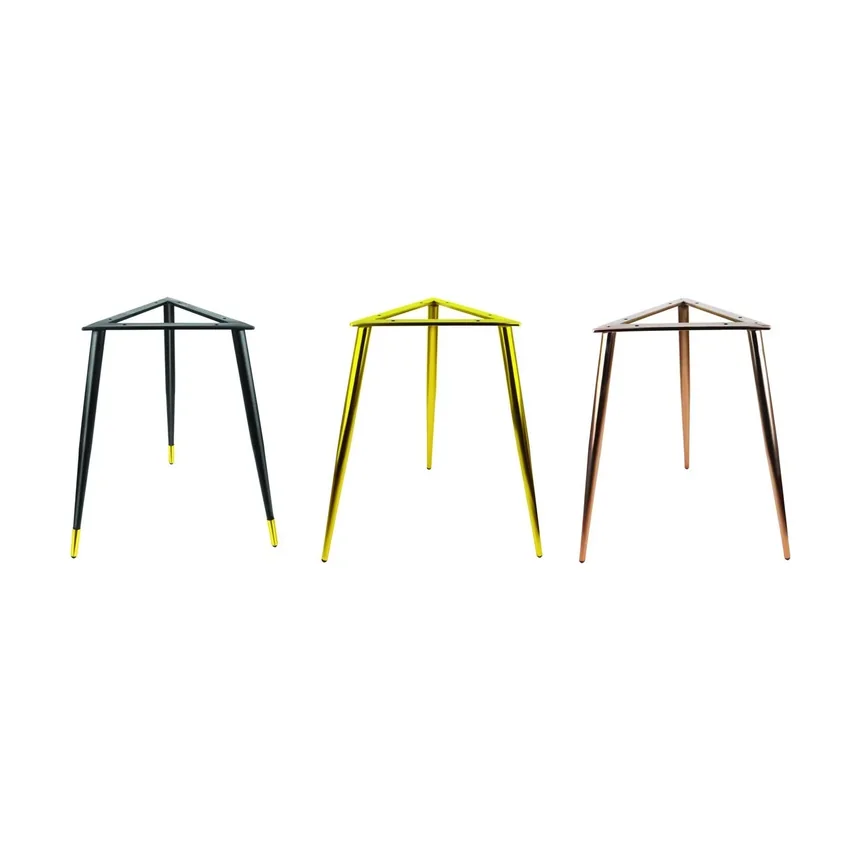
- Four-leg or frame: for larger and rectangular tops.
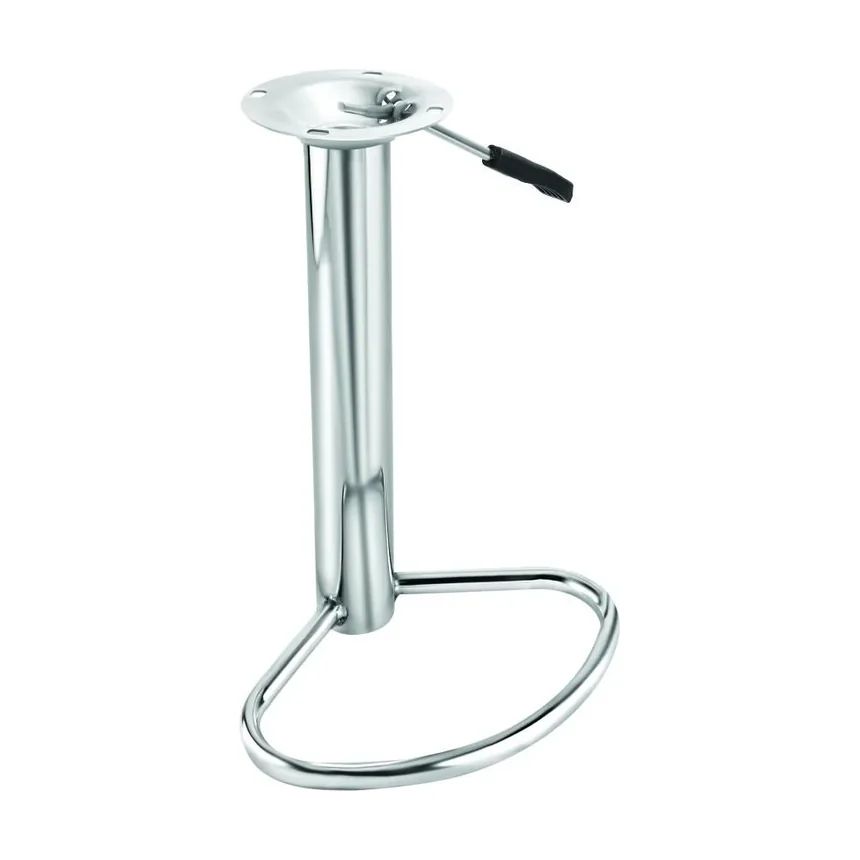
- Foot-rest rings and cross bars: added on counter and bar-height tables.
Details that prevent wobble
- Adjustable glides under each arm for uneven floors.
- A top plate (spider) wide enough to hold the top's screws well away from the centre.
- A column wall thick enough not to flex at bar height.
Finish
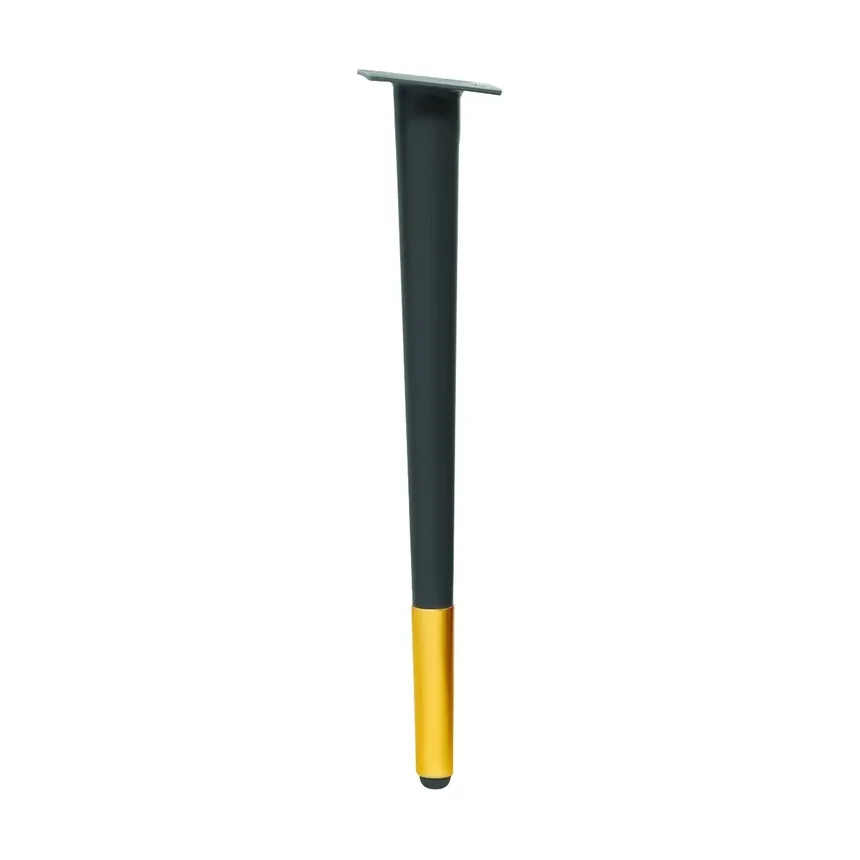
Black powder coat is the default for cafes; chrome, gold and rose-gold plated finishes suit premium interiors. For outdoor use, say so when ordering so the finish system can be chosen for it.
Related products from UNICO
Have a requirement? Send a product code, photo or drawing and we reply within one business day.